Industry
⏱ 8 min
How SMEs Use Technology to Optimise Processes and Teams in 2026
From paper records to artificial intelligence: how Portuguese production companies are digitising operational processes in 2026.

The state of digital transformation in Portuguese industrial SMEs
There is a conversation that keeps repeating in Portuguese SME management: everyone knows they have to 'digitalise' but few have clarity on what that means in practice, and even fewer know where to start.
The usual result: a company that uses modern invoicing software, manages clients in a 2015 Excel file, and uses paper sheets to record employee hours. Three realities coexisting.
This article is about concrete technologies that Portuguese production SMEs are adopting now — what they solve, how much they cost, and how to decide which to prioritise.
The three areas with the most immediate gain
Based on what we observe in industrial companies with 10 to 100 employees, there are three process categories where technology delivers fast and concrete returns:
- Attendance tracking and working time management
- Creation and management of internal documentation
- Organisation and access to files
1. Attendance tracking and time tracking
The persisting problem: most industrial SMEs still use paper or Excel. Every month someone spends hours consolidating data, correcting errors, and answering questions. And when the ACT visits — fines start at €612.
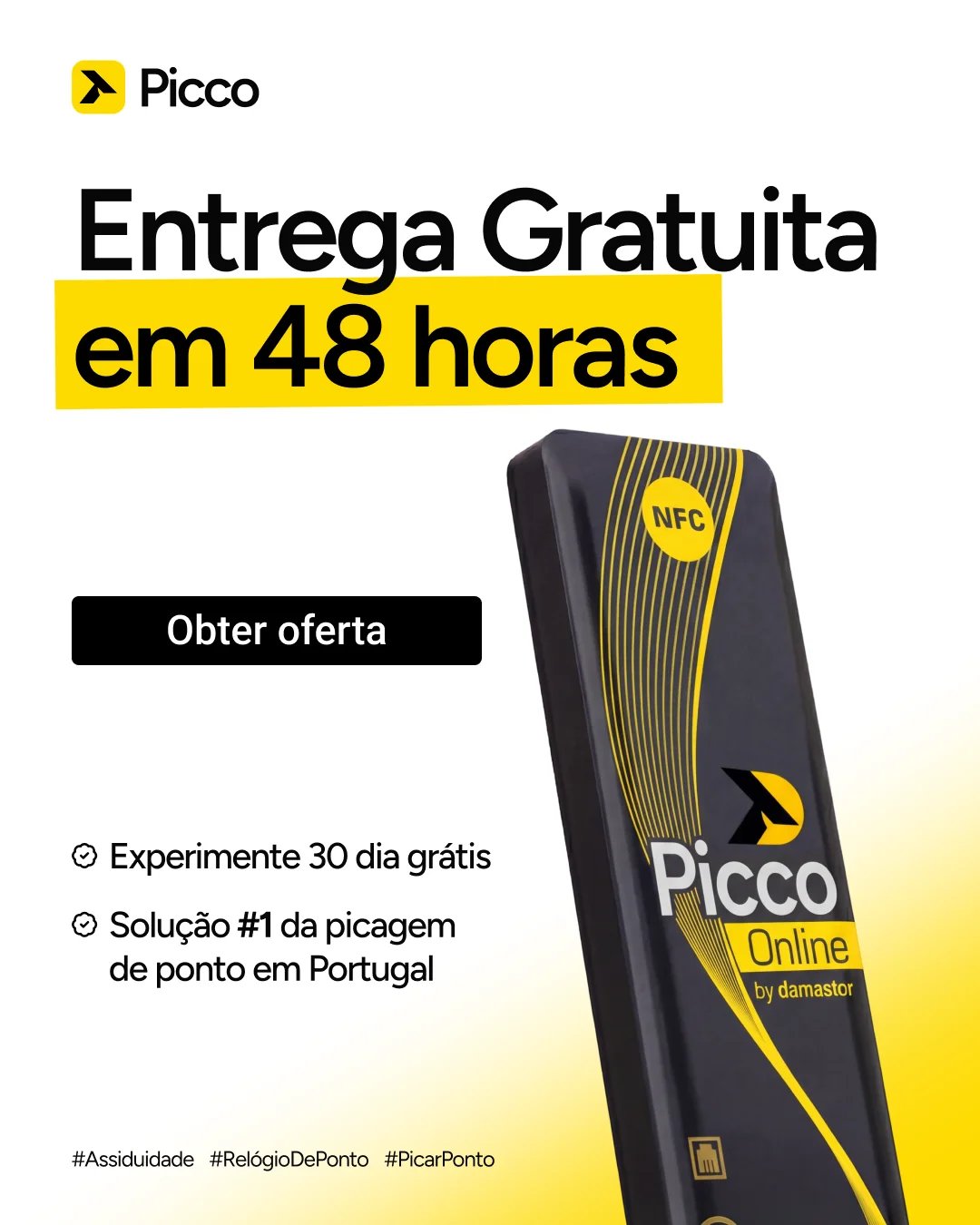
The solution gaining ground: RFID terminals with a cloud platform. The employee taps a card when entering and leaving. The system records automatically. Data is available in real time, stored for 5 years, and exportable in seconds. Monthly consolidation work goes from hours to minutes.
What to consider before implementing:
- Do employees have a smartphone available during work? If not → RFID
- What is the physical environment? (dust, humidity, extreme temperatures?)
To understand the options, read which is the best time tracking system in Portugal. To see the product Damastor developed for this purpose, read the launch of the Picco Time Clock
Typical ROI: reduction of 2 to 5 hours per month of administrative work. Elimination of ACT fine risk.
2. Documentation automation with AI
The persisting problem: in SMEs, creating internal documentation is slow, inconsistent, and often does not happen at all. Procedures that exist in the manager's head but were never written down.
What AI is changing: generative AI tools are democratising documentation creation. An SME without a content team can today produce internal procedures, contract templates, monthly reports, and internal communications.
Concrete use cases:
- New employee onboarding manual: describe to the model how the company works. The AI produces a complete draft in minutes. To learn what good onboarding includes, read how to onboard a new employee in the first 30 days
- Safety procedure sheets: from a description of the process, the AI generates formatted documentation ready to post.
What AI does not replace: judgement, legal responsibility, and specific contextual knowledge. AI produces drafts — the responsibility for review is always human.
3. Organisation and access to files
The persisting problem: 'where is that file?' is a question asked dozens of times a week in SMEs. Local folders on individual PCs, emails used as an archiving system.
What works:
- Cloud platforms for file management (Google Drive, OneDrive) solve fragmentation
- Knowledge management platforms (Notion, ClickUp Docs) allow you to build a company knowledge base — policies, procedures, templates — accessible and searchable
How to prioritise: the cost-of-not-doing criterion
- Attendance tracking: cost of not doing = ACT fine (€612 to €9,690) plus wasted monthly manual time. High priority.
- AI documentation: diffuse cost — time lost creating documents from scratch, slower onboarding of new employees. Medium priority.
- File organisation: low cost per incident but frequent. Incremental improvement.
For most industrial SMEs, this analysis points to the same sequence: time tracking first, then documentation, then file organisation.
picco.damastor.com
This article was produced by Damastor, developers of Picco.
Artigos Relacionados

Address
Rua Padre José Joaquim Martins, 30
4830-440, Santo Emilião, Póvoa de Lanhoso, Braga
Portugal
Contactos
(351) 923 321 651
info@damastor.com
Sales & Installation Hours
Monday to Friday → 8:00 AM to 8:00 PM
Saturday → 8:00 AM to 12:30 PM
Sundays and Holidays → Closed
Compare a Picco
Support (24/7)
© 2026 Todos os direitos da Picco reservados a Damastor